“Your only competition is who you were yesterday.”
中文译文:你唯一的对手,就是昨天的自己。
米格(Miguel)
——美国电影《寻梦环游记》(English: Coco)
电影上映时间(Film release dates)2017年11月22日(美国),2017年11月24日(中国内地)
这句话出现在影片的中后段,米格在亡灵世界经历了一系列冒险之后,逐渐认识到“成功”的真正含义。米格出生在一个世代禁止音乐的鞋匠家庭,却梦想成为歌神德拉库斯那样的音乐家。在亡灵节那天,他因偷取歌神的吉他而误入亡灵世界,在那里他遇到了落魄乐手埃克托,两人一起踏上了寻找歌神的旅程。然而,当米格终于见到偶像德拉库斯时,却发现对方竟是一个为了名利不惜毒杀搭档的伪君子——而那个被他毒杀的人,正是埃克托,米格真正的曾曾祖父。在识破偶像的真面目之后,米格终于明白:追逐别人的脚步永远不会让你成为自己,你唯一的对手,从来都是昨天的自己。 这句话既是米格对“追梦”的重新定义,也是整部电影关于“成为自己”这一核心主题的最终升华。
This line appears in the middle to latter part of the film, after Miguel has gone through a series of adventures in the Land of the Dead and gradually comes to understand the true meaning of “success.” Miguel was born into a family of shoemakers that had banned music for generations, yet he dreams of becoming a musician like the legendary singer, De La Cruz. On the Day of the Dead, he accidentally stumbles into the Land of the Dead after stealing the singing god’s guitar. There, he meets the down-on-his-luck musician Hector, and the two set off together on a journey to find the singing god. However, when Miguel finally meets his idol, Delacroix, he discovers that he is a hypocrite who would go so far as to poison his own partner for fame and fortune—and the man he poisoned was none other than Hector, Miguel’s true great-great-grandfather. After seeing through his idol’s true nature, Miguel finally realized: following in someone else’s footsteps will never allow you to become yourself; your only true rival has always been your past self. This line not only redefines Miguel’s understanding of “chasing dreams,” but also serves as the ultimate culmination of the film’s central theme of “becoming oneself.”
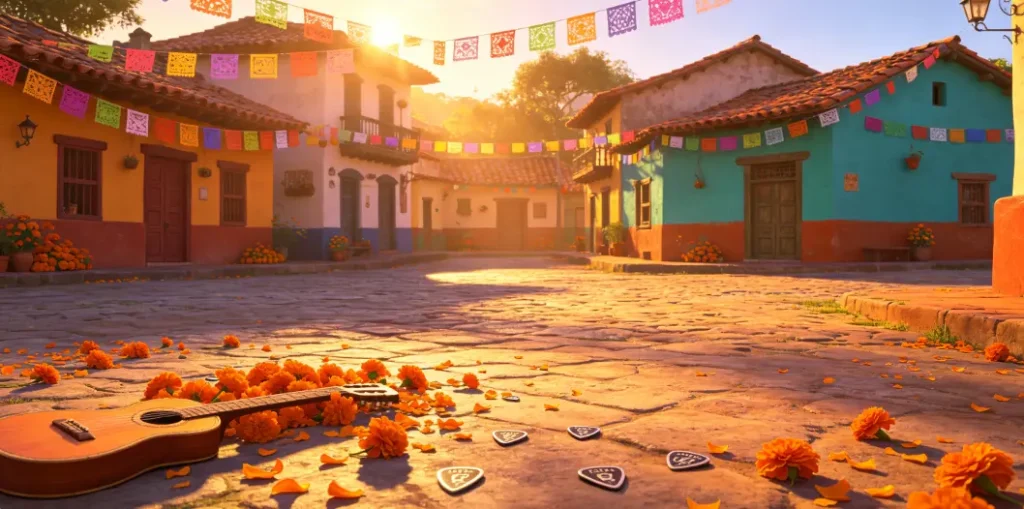
我们通常被教育要“超越别人”——考更高的分、进更好的学校、找到更体面的工作。但米格的冒险却揭示了这种“比较式竞争”的虚妄:他原本以歌神德拉库斯为榜样,疯狂模仿他的唱法、他的姿态、他的一切,却差点因此失去了真正重要的东西——家人、本真、以及属于自己的声音。当他发现德拉库斯的成功建立在背叛与欺骗之上时,他才意识到:以别人为对手,你永远在别人的游戏规则里打转;以昨天的自己为对手,你才能走出属于自己的路。 这句话把“竞争”从一场与他人的较量,变成了一场与自己的对话——你不是要打败别人,而是要比昨天的自己更接近那个想成为的人。
埃克托为女儿可可写的歌《Remember Me》并不是写给全世界的,而是写给一个人的。这首歌的深层含义是:真正的成功不是被所有人记住,而是被你爱的人记住;真正的伟大不是成为别人眼中的神,而是成为自己心中的那个版本。 米格一开始追逐的是歌神的名声与光芒,但最后他唱响《Remember Me》是为了唤醒曾祖母可可对父亲的记忆——那一刻,他不再是模仿德拉库斯的“另一个歌神”,而是用音乐连接家人的米格。他的“对手”从“德拉库斯”变成了“昨天的自己”——那个只知道模仿、还没学会用音乐表达真心的小男孩。
在《寻梦环游记》中,亡灵世界的设定有一个重要规则:当活人世界再没有人记得你时,你就会经历“终极死亡”——彻底消散。这个规则看似在讲“被记住”的重要性,实则也在讲“成为自己”的紧迫性:你只有活出不可替代的自己,才值得被记住;而活出不可替代的自己,唯一的路径就是不断超越昨天的自己。 米格在亡灵世界看到落魄的埃克托——一个快要被人遗忘的灵魂——却最终发现他才是那个写出最动人歌曲的人。这本身就是对“成功”的重新定义:埃克托没有成为万众瞩目的歌神,但他成为了可可心中永远的父亲,而那份“被记住”的纯度,远比德拉库斯那些虚假的掌声更深刻。
社交媒体的“展示柜效应”让每个人都在拿自己的日常与他人的高光时刻比较——我们焦虑地刷着别人的成就、别人的旅行、别人的“完美人生”,却越来越看不清自己真正想要什么。而《寻梦环游记》通过米格的故事告诉我们:当你把注意力从“别人”身上移开,回到“自己”身上,你才可能真正开始成长。 你不需要成为第二个谁,你只需要比昨天的自己多一点点勇气、多一点点真诚、多一点点爱。米格最终没有成为德拉库斯,但他成为了让可可想起父亲、让家人接纳音乐的米格——那个版本的他,远比任何“复制品”都更有价值。
真正的“胜利”,不是赢过任何人,而是你回头看昨天的自己时,能够坦然地说一句:我比昨天更接近我想成为的那个人。 而这,就是《寻梦环游记》留给每一个观众最温柔的鼓励——你的路只属于你,你的对手也只有你,而每一天,都是你超越“昨天”的新机会。
We’re usually taught to “outdo others”—to get higher scores, get into better schools, and find more prestigious jobs. But Miguel’s adventure reveals the futility of this “competition based on comparison”: he originally looked up to the singing legend Dracus, frantically imitating his singing style, his mannerisms, and everything about him, but nearly lost what truly mattered as a result—his family, his authenticity, and his own voice. It wasn’t until he discovered that Delacus’s success was built on betrayal and deception that he realized: when you view others as your rivals, you’re forever trapped within their rules of the game; only by competing against your past self can you forge your own path. This insight transforms “competition” from a contest against others into a dialogue with oneself—it’s not about defeating others, but about getting closer to the person you aspire to be than you were yesterday.
The song “Remember Me,” which Hector wrote for his daughter Coco, wasn’t meant for the whole world—it was written for one person. The deeper meaning of this song is this: true success isn’t being remembered by everyone, but by the one you love; true greatness isn’t becoming a god in the eyes of others, but becoming the version of yourself that exists in your own heart. At first, Miguel pursued the fame and glory of being “The Legend,” but in the end, he sang “Remember Me” to awaken his great-grandmother Coco’s memories of her father—at that moment, he was no longer “another Legend” imitating De La Cruz, but Miguel, connecting his family through music. His “rival” shifted from “Delacroix” to “his former self”—that little boy who only knew how to imitate others and hadn’t yet learned to express his true feelings through music.
In Coco, the realm of the dead operates under an important rule: when no one in the world of the living remembers you anymore, you will experience “ultimate death”—complete oblivion. While this rule seems to emphasize the importance of “being remembered,” it actually underscores the urgency of “becoming yourself”: only by living as an irreplaceable individual are you worthy of being remembered; and the only path to becoming that irreplaceable self is to constantly surpass who you were yesterday. In the Land of the Dead, Miguel sees a down-and-out Hector—a soul on the verge of being forgotten—yet ultimately discovers that he is the one who wrote the most moving songs. This, in itself, is a redefinition of “success”: Hector didn’t become a rock star in the spotlight, but he became Coco’s eternal father in her heart—and the purity of that “being remembered” is far more profound than Delacroix’s hollow applause.
The “showcase effect” of social media leads everyone to compare their daily lives with others’ highlight moments—we anxiously scroll through others’ achievements, travels, and “perfect lives,” yet we lose sight of what we truly want. Through Miguel’s story, Coco tells us: only when you shift your focus away from “others” and back to “yourself” can you truly begin to grow. You don’t need to become a copy of someone else; you just need to be a little braver, a little more sincere, and a little more loving than you were yesterday. In the end, Miguel didn’t become Delacroix, but he became the Miguel who helped Coco remember her father and led his family to embrace music—and that version of him is far more valuable than any “copy.”
True “victory” isn’t about beating anyone else; it’s about being able to look back at who you were yesterday and say with confidence: “I’m closer today to the person I want to be.” And this is the gentlest encouragement Coco offers every viewer—your path belongs only to you, your only opponent is yourself, and every day is a new opportunity to surpass “yesterday.”
What do you think?