“Se non esci, penserai che questo sia il mondo intero.”
中文译文:如果你不出去走走,你就会以为这就是全世界。
English translation:If you don’t go out and see the world, you’ll end up thinking this is all there is to it.
阿尔弗雷多(Alfredo)
——意大利电影《天堂电影院》(Cinema italiano:Nuovo Cinema Paradiso)
电影上映时间(Film release dates)1988年11月17日
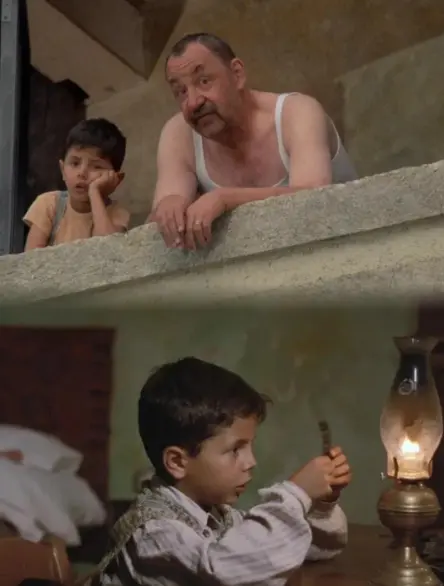
青年托托爱上银行家女儿艾莲娜,恋情因阶级差异受阻,托托服兵役归来后心爱的女孩也已离开,小镇生活令他陷入迷惘。此时,已是盲人的老放映师阿尔弗雷多在火车站为托托送行。他以近乎“残忍”的方式逼托托离开西西里岛,命令他永远不要回头,直到功成名就。这句嘱托,是一位如父如友的长者用一生阅历为年轻人指出的突围之路。
The young Toto falls in love with Elena, the banker’s daughter, but their romance is thwarted by class differences. When Toto returns from military service, his beloved has already left, and life in the small town leaves him feeling lost. At this point, Alfredo, the elderly projectionist—now blind—sees Toto off at the railway station. In a manner bordering on ‘cruelty’, he forces Toto to leave Sicily, ordering him never to look back until he has made his mark in the world. This advice is a path to breaking free, charted for the young man by an elder—a figure who is both a father and a friend—drawing on a lifetime of experience.
这句看似平淡的劝诫,实则是一把刺破“认知牢笼”的利刃。它最深刻的含义不在“出走”本身,而在于揭示了人类普遍的认知困境——地理的局限必然带来思维的茧房。
在托托生活的西西里小镇,教堂钟声、广场闲话、胶片光影便是全部日常。阿尔弗雷多深知,在封闭的熟人社会里,爱恨情仇会被无限放大,一次失恋便足以让人误以为这是生命的全部重量。如果不走出去,托托会把小镇的偏见当作公理,把父辈的命运当作归宿。阿尔弗雷多要打破的,不是托托对家乡的眷恋,而是“此处即世界”的狭隘幻觉。
阿尔弗雷多知道托托有过人的电影天赋,但天赋若没有广阔世界的滋养,终将沦为小镇茶余饭后的消遣。他说这话时,实则在用最冷酷的温情切断托托的后路。“不出去走走”并非仅指物理上的原地踏步,更指精神上的自我设限。 多少人终其一生,都在用童年积累的旧地图丈量成年后的新大陆,却误以为地图边界就是世界尽头。
故乡是港湾,但也可能是牢笼。阿尔弗雷多要求托托功成名就前不准回来,是因为他明白,只有彻底离开,才能获得审视故乡的客观距离;只有见过真正的“全世界”,归来时才能带着建设家乡的能力与胸怀。否则,乡愁便只会消磨意志。
在信息茧房愈演愈烈的今天,“不出去走走”也可以指不打破信息壁垒、不跨界交流。我们刷着同质化的短视频,接收算法投喂的单一观点,也容易以为“这就是全世界”。真正的出走,是精神上的越狱与视野上的扩容。
阿尔弗雷多燃烧了自己晚年的陪伴,点亮了托托远行的灯塔——人生的悲剧往往不是走投无路,而是坐井观天却浑然不觉。 我们习惯在安全区内寻求认同,却忘了世界的辽阔需要用脚步去丈量、用痛感去兑换。有时候,离开不仅是为了遇见更好的世界,更是为了不辜负那个本可以更开阔的自己。当我们将“全世界”仅仅定义为眼前的一亩三分地时,我们就已经把自己活成了囚徒。
This seemingly mundane piece of advice is, in fact, a sharp blade that pierces the ‘cage of perception’. Its deepest significance lies not in the act of ‘leaving’ itself, but in revealing a universal human cognitive dilemma—geographical limitations inevitably lead to a mental cocoon.
In the Sicilian village where Toto lives, church bells, idle chatter in the square and the play of light and shadow on film constitute the entirety of daily life. Alfredo knows full well that in a closed-off community of acquaintances, love, hate and emotional entanglements are magnified to the extreme; a single heartbreak is enough to lead one to mistakenly believe it represents the full weight of life. If he does not venture out, Toto will come to regard the village’s prejudices as universal truths and the fate of his forebears as his own destiny. What Alfredo sought to shatter was not Toto’s attachment to his hometown, but the narrow-minded illusion that ‘this place is the whole world’.
Alfredo knew Toto possessed extraordinary cinematic talent, but without the nourishment of the wider world, that talent would ultimately degenerate into nothing more than small-town gossip. In saying this, he was, in fact, cutting off Toto’s retreat with the coldest of tenderness. ‘Not venturing out’ refers not merely to physical stagnation, but more to self-imposed spiritual limitations. How many people spend their entire lives using the old maps accumulated in childhood to chart the new continents of adulthood, yet mistakenly believe that the map’s boundaries mark the end of the world?
One’s hometown is a harbour, but it can also be a cage. Alfredo insisted that Toto must not return until he had achieved success and fame, because he understood that only by leaving completely could one gain the objective distance needed to view one’s hometown; only by having seen the ‘whole world’ could one return with the ability and vision to build one’s hometown. Otherwise, homesickness would merely erode one’s resolve.
In an age when information silos are becoming increasingly entrenched, ‘not going out for a walk’ can also mean failing to break down information barriers or engage in cross-boundary dialogue. As we scroll through homogenised short videos and absorb the singular perspectives fed to us by algorithms, we are all too easily led to believe that ‘this is the whole world’. True escape is a spiritual break from confinement and a broadening of one’s horizons.
Alfredo sacrificed the companionship of his twilight years to light the beacon guiding Toto on his journey—the tragedy of life often lies not in having no way out, but in viewing the world from the bottom of a well without even realising it. We are accustomed to seeking validation within our comfort zones, yet we forget that the vastness of the world must be measured by our footsteps and earned through pain. Sometimes, leaving is not merely to encounter a better world, but also to live up to the potential of a self that could have been far more open-minded. When we define ‘the whole world’ as nothing more than the small patch of land before our eyes, we have already turned ourselves into prisoners.