“Time is greedy—sometimes, it devours all the details all by itself.”
中文翻译:时间很贪婪——有时候,它会独自吞噬所有的细节。
阿米尔(Amir)
——美国电影《追风筝的人》(English: The Kite Runner)
电影上映时间(Film release dates)2007年12月14日(美国)
这句话出现在影片的中后段,是成年阿米尔在回忆童年往事时的一段旁白。阿米尔与仆人哈桑之间那段关于背叛与救赎的故事,是他一生无法摆脱的重量。小时候,他曾目睹哈桑为保护那只蓝色风筝而被坏人凌辱,却因为怯懦选择了逃避;他陷害哈桑偷窃,逼走了这个对他最忠诚的人。多年后,阿米尔已经移居美国,成为作家,但他始终无法忘记那些往事——然而他发现,随着时间流逝,记忆中的某些细节开始模糊:哈桑当时的表情、那条小巷里阳光的角度、自己逃跑时的脚步声——它们像被某种无形的东西一点点蚕食。正是这种“记忆正在消失”的恐惧,让他说出了这句话。他意识到,时间不仅会带走痛苦,也会带走那些他本想牢牢抓住的、与哈桑有关的一切——而正是这种“正在失去”的恐慌,最终推动他踏上那条“再次成为好人”的救赎之路。
This line appears in the middle to latter part of the film, delivered as a voice-over by the adult Amir as he recalls his childhood. The story of betrayal and redemption between Amir and his servant Hassan is a burden he has been unable to shake off throughout his life. As a child, he witnessed Hassan being humiliated by bullies while protecting that blue kite, yet out of cowardice, he chose to run away; he framed Hassan for theft, driving away the person who was most loyal to him.
Many years later, Amir has moved to the United States and become a writer, but he has never been able to forget those events—yet he discovers that, as time passes, certain details in his memory are beginning to fade: Hassan’s expression at the time, the angle of the sunlight in that alley, the sound of his own footsteps as he ran away—they seem to be gradually eroded by some invisible force. It was precisely this fear that “memories are fading” that led him to utter those words. He realized that time would not only take away the pain, but also everything related to Hassan that he had wanted to hold on to tightly—and it was this panic of “losing” that ultimately drove him to embark on the path of redemption to “become a good person again.”
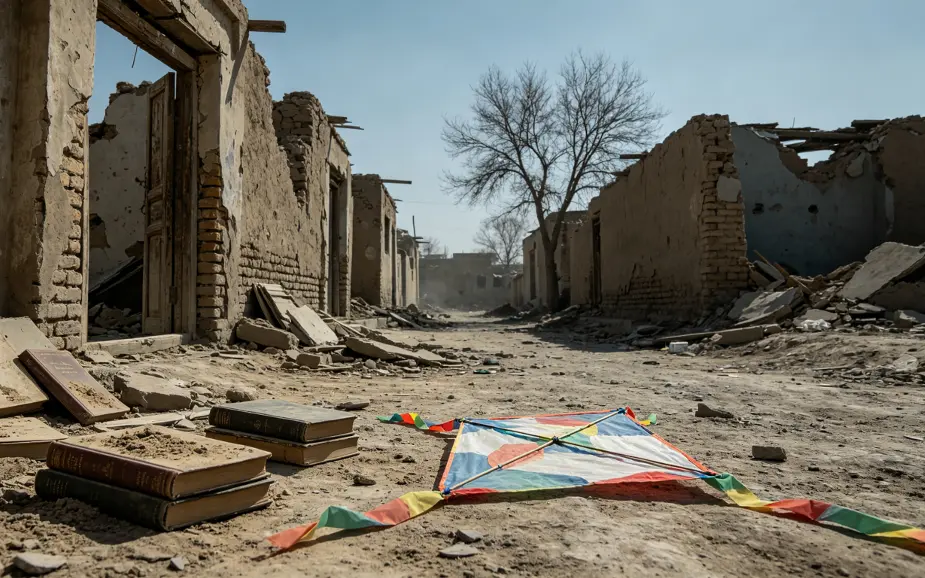
我们通常认为遗忘是一种主动或被动的大脑行为——记性不好、时间太久、信息太多。但阿米尔却说“时间很贪婪”,他把时间拟人化为一个饥饿的掠夺者,会“独自吞噬”那些细节。这种拟人化让遗忘从一种“中性现象”变成了一种“有意志的丧失”——你不只是在遗忘,你是正在被时间剥夺。而那个“独自”一词尤其沉重:时间不需要你的同意,不需要你的配合,它自己就会一口一口吃掉那些你最想留住的东西——包括你曾经犯下的错、你曾经伤害过的人、你曾经发誓永远不会忘记的面孔。阿米尔正是感受到了这种被剥夺的恐慌,才意识到:如果他再不行动,他可能连“哈桑”这个名字所承载的全部重量都要失去了。
阿米尔之所以最终决定回到战火中的喀布尔去救哈桑的儿子索拉博,正是因为这句话所描述的那种“失去”让他无法忍受——他不能原谅自己曾经背叛哈桑,但他更不能原谅自己有一天会忘记那次背叛。如果连细节都被时间吞没了,那他欠哈桑的债就永远无法偿还了。他需要那些细节——那条小巷、那只风筝、那个转身逃开的午后——来提醒自己他曾经是一个什么样的人,以及他需要成为一个什么样的人。时间吞噬细节,而救赎,恰恰是在细节完全消失之前,用行动去回应那些细节所代表的亏欠。
“为你,千千万万遍”——哈桑的那句誓言是一个具体的、温暖的细节;而阿米尔的怯懦和背叛,则是他想要遗忘却又不该遗忘的细节。时间会吞噬所有细节,但某些细节被吞噬的本身,就是一种更大的丧失。当阿米尔在影片最后追着风筝为索拉博说出“为你,千千万万遍”时,他其实正是在用新的行动,去对抗时间对那些旧细节的吞噬——他无法让哈桑回来,但他可以让哈桑的名字在他的生命里继续活着,让那些细节不被彻底吞没。
我们总以为时间会治愈一切,而时间也会带走那些我们并不想忘记的东西——童年老房子的味道、已故亲人说话的语气、初恋时对方穿的衣裳。我们以为那些记忆会永远刻在身体里,但时间比我们想象中更贪婪,它会在我们毫无察觉的时候,一点一点把它们拿走。而当我们有一天突然意识到“我好像记不清了”的时候,那种恐惧比失去本身更令人心痛——因为你失去的不仅是那个人、那件事,更是你与它们之间的最后一点联系。这句话提醒我们:珍惜当下不只是为了享受此刻,更是为了给未来的记忆留下足够多的细节,让时间吞噬得慢一些,再慢一些。
We usually think of forgetting as an active or passive mental process—a poor memory, the passage of time, or an overload of information. But Amir says, “Time is greedy.” He personifies time as a hungry predator that “devours” those details “all on its own.” This personification transforms forgetting from a “neutral phenomenon” into a “willful loss”— —you’re not just forgetting; you’re being robbed by time. And the word “alone” carries particular weight: time needs neither your consent nor your cooperation; it devours, bite by bite, the very things you most want to hold onto—including the mistakes you’ve made, the people you’ve hurt, and the faces you once swore you’d never forget. It was precisely this panic of being stripped away that Amir felt, leading him to realize: if he didn’t act soon, he might lose even the full weight carried by the name “Hassan.”
The reason Amir ultimately decided to return to war-torn Kabul to save Hassan’s son, Sohrab, was precisely because he could not bear the kind of “loss” described in that sentence—he could not forgive himself for betraying Hassan, but even more so, he could not forgive himself for one day forgetting that betrayal. If even the details were swallowed up by time, then the debt he owed Hassan could never be repaid. He needed those details—that alleyway, that kite, that afternoon when he turned and ran away—to remind himself of the kind of person he once was, and the kind of person he needed to become. Time devours details, but redemption lies precisely in responding through action to the debt represented by those details before they vanish completely.
“For you, a thousand times over”—Hassan’s vow is a concrete, heartwarming detail; whereas Amir’s cowardice and betrayal are the details he wants to forget but must not. Time devours all details, but the very act of certain details being devoured represents an even greater loss. When Amir chases after the kite at the end of the film and says to Sohrab, “For you, a thousand times over,” he is, in fact, using a new act to resist time’s devouring of those old details—he cannot bring Hassan back, but he can keep Hassan’s name alive in his own life, ensuring those details are not completely swallowed up.
We always assume that time heals all wounds, yet it also carries away the very things we do not wish to forget—the scent of the old house from our childhood, the tone of voice of a deceased loved one, the clothes our first love wore. We believe those memories will be etched into our bodies forever, but time is more greedy than we imagine; it takes them away bit by bit without us even noticing. And when we suddenly realize one day, “I don’t seem to remember anymore,” that fear is more heartbreaking than the loss itself—because what you’ve lost isn’t just that person or that event, but the very last thread connecting you to them. This phrase reminds us: cherishing the present isn’t just about enjoying the moment; it’s also about leaving enough details for future memories, so that time devours them a little slower, just a little slower.
What do you think?