“All of life is an act of letting go, but what hurts the most is not taking a moment to say goodbye.”
中文译文:人生就是不断地放下,然而痛心的是,我还没来得及与你们好好告别。Adult-Pi (成年-派)
——美国/英国/加拿大/印度合拍电影《少年派的奇幻漂流》(English: Life of Pi)
电影上映时间(Film release dates)2012年11月22日(中国内地)
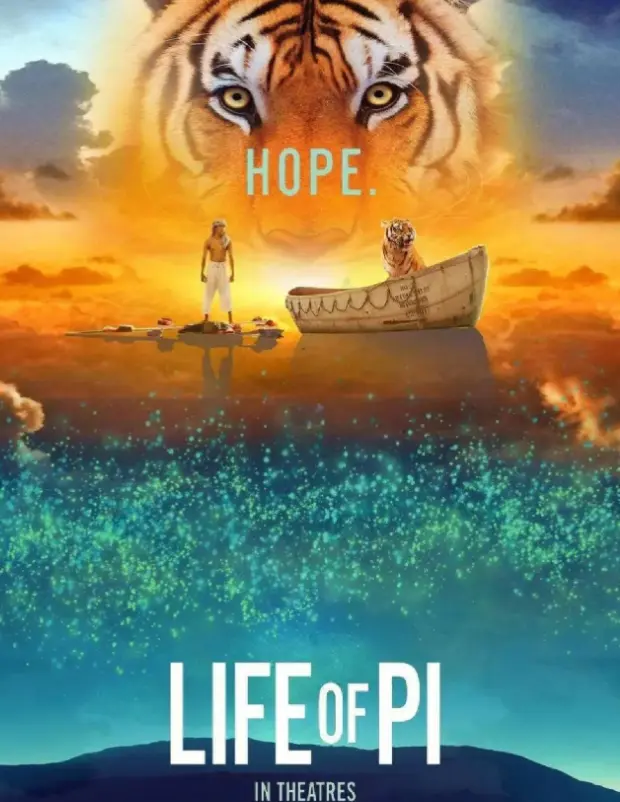
这句话出现在影片的结尾部分,成年后的派在向作家讲述完他与老虎理查德·帕克在海上漂流227天的奇幻经历后,被问及“你之前说这个故事会让你相信上帝”的含义时,派一边流泪一边说出了这段独白。整部电影中,派经历了失去家人、失去船只、失去文明社会的庇护,最后在墨西哥海岸登陆时,他生命中最重要的一段关系——与理查德·帕克的共处——以一种极其平淡的方式终结:老虎头也不回地走进了丛林,没有告别,没有回头。而派在多年后重述这段经历时,最痛心的不是海难本身,不是饥饿与恐惧,而是他没能和那些“放下”的人或事物,好好地说一声再见。
This line appears near the end of the film, when the adult Pi is telling his story to a writer. After recounting his 227 days adrift on the Pacific Ocean with a Bengal tiger named Richard Parker, Pi is asked about his earlier statement that “this story will make you believe in God.” As he responds, he begins to weep and delivers this monologue. Throughout the film, Pi loses his family, his ship, and the protection of civilized society. Yet when he finally reaches the coast of Mexico, his most significant relationship—his shared existence with Richard Parker—ends in the most anticlimactic way: the tiger walks into the jungle without a single glance back, no farewell, no recognition. Years later, as Pi retells this experience, what pains him most is not the shipwreck itself, nor the hunger and fear, but the fact that he never had the chance to say a proper goodbye to those he let go.
我们通常以为告别需要一个正式的场合、一个完整的仪式——挥手、拥抱、说“再见”——但现实中大部分的“放下”都是无声的、潦草的、甚至没有任何预先通知的。
派的家人在一瞬间沉入海底,他连他们的最后一面都没见到;理查德·帕克在抵达陆地的那一刻就转身离去,没有给他任何道别的机会。“来不及”才是人生最大的痛感来源——不是“失去了”,而是“失去了却没能好好说再见”。这种未完成的告别会悬置在记忆里,变成一种永远无法闭合的情感伤口。
派在讲述这个故事时,面前摆着两个版本:一个是有老虎、食人岛和奇幻漂流的版本,另一个是残酷的、人与人在求生中自相残杀的版本。他问作家:“你更喜欢哪个?”作家说:“有老虎的那个。”派回答:“谢谢,这更接近上帝的旨意。”而“来不及告别”这句话,恰恰是派在两个版本中都共通的情感真相——无论你选择相信哪个版本,人生中最重要的离别往往都是仓促的。记忆的作用,不是还原那些告别,而是用故事去弥补那些“来不及”。派用227天的奇幻漂流,为他在现实中失去的一切,创造了一个漫长的、富于象征意义的告别。
在人与动物的关系维度上,理查德·帕克的离去之所以让派如此痛心,不仅仅因为它是一只陪伴他度过生死的老虎,更因为它是派少年时代最后的一个标记。当老虎消失在丛林深处时,派的少年时代也随之结束了。他后来结婚生子、过上了普通人的生活,但那份“没来得及告别”的遗憾,一直埋在他身体里,直到他对着作家说出来,才终于获得某种程度的释放。这也说明了为什么成年派在讲述这个故事时会流泪——他痛哭的不是老虎走了,而是那个陪着老虎、在海上漂流了227天的少年派,再也没有回来过。
在当代语境中,这句话几乎适用于所有人生命中那些“来不及”的时刻——没来得及见亲人最后一面、没来得及对前任说一声感谢、没来得及向青春期的自己告别、没来得及在搬家前再看一眼住了多年的老房子。
真正的成长,不是学会如何得到,而是学会如何放手;而比放手更难的,是接受那些“没有好好告别”的放手本身。李安用这句话告诉我们:人生就是一场持续不断的失去,而我们唯一能做的,不是阻止失去,而是在失去之前,尽可能多地抓住每一个“好好道别”的机会。
We usually think that saying goodbye requires a formal occasion, a complete ritual—waving, hugging, saying “goodbye”—but in reality, most instances of “letting go” are silent, hasty, and even happen without any prior notice.
Pi’s family sank to the bottom of the ocean in an instant; he didn’t even get to see them one last time. Richard Parker turned and walked away the moment he reached land, leaving Pi no chance to say goodbye. “Not having enough time” is the greatest source of pain in life—not “having lost something,” but “having lost something without being able to say a proper goodbye.” These unfinished goodbyes linger in our memories, turning into emotional wounds that can never fully heal.
As Pi tells this story, two versions lie before him: one featuring a tiger, a cannibal island, and a fantastical drift; the other, a brutal version where people turn on one another in the struggle for survival. He asks the writer, “Which do you prefer?” The writer replies, “The one with the tiger.” Pi answers, “Thank you. That’s closer to God’s will.” And the phrase “no time to say goodbye” is precisely the emotional truth common to both versions of Pi’s story—no matter which version you choose to believe, the most important goodbyes in life are often rushed. The role of memory is not to recreate those goodbyes, but to use stories to make up for those “moments we didn’t have time for.” Through his 227-day fantastical drift, Pi created a long, symbolically rich farewell for everything he had lost in reality.
In terms of the relationship between humans and animals, the reason Richard Parker’s departure was so heartbreaking for Pi was not merely because he was a tiger who had accompanied him through life and death, but also because he represented the final marker of Pi’s youth. When the tiger vanished into the depths of the jungle, Pi’s youth came to an end as well. He later married, had children, and led an ordinary life, but the regret of “not having had time to say goodbye” remained buried deep within him until he finally voiced it to the writer, at which point he found some measure of release. This also explains why the adult Pi wept as he told this story—he wasn’t crying because the tiger was gone, but because the young Pi who had drifted at sea with the tiger for 227 days had never returned.
In a contemporary context, this line applies to nearly every “too late” moment in our lives—not having time to see a loved one one last time, not having time to thank an ex, not having time to bid farewell to our teenage selves, or not having time to take one last look at the old house we’d lived in for years before moving away.
True growth isn’t about learning how to gain, but about learning how to let go; and harder still than letting go is accepting the very act of letting go when we “didn’t say a proper goodbye.” With these words, Ang Lee tells us: Life is a continuous series of losses, and the only thing we can do is not to prevent them, but to seize every opportunity to “say a proper goodbye” as much as possible before they happen.
What do you think?