「千通のメールを交わしても、心と心の距離は1センチも近づかない。」
中文译文:就算发了一千条短信,心与心的距离也不会靠近1厘米。
English translation: Even if we exchange a thousand emails, the distance between our hearts won’t close by even a centimeter.
远野贵树(遠野貴樹)
——日本动画《秒速5厘米》(日文片名:秒速5センチメートル)
动画上映时间(Anime release dates)2007年3月3日(日本)
这句话出现在影片的第三部分《秒速5厘米》的结尾,是成年后的贵树站在铁路道口,望着与明里擦肩而过的瞬间,内心涌出的一段独白。影片讲述了贵树和明里从青梅竹马到因搬家而渐行渐远的故事。年少时他们曾用书信和短信保持联系,贵树曾冒着大雪坐电车去见明里,但时间和距离最终还是把两人推向了不同的人生轨道。多年后,他们各自有了自己的生活,虽然偶尔还能在社交工具上交换信息,但彼此之间那道看不见的隔阂却越来越厚。贵树在结尾时意识到:即使他们仍然可以联系,即使他们还在同一个城市,那些文字已经无法让两颗心像小时候那样靠近了。
This line appears at the end of the film’s third part, 5 Centimeters Per Second, as an inner monologue that wells up within Takaki—now an adult—as he stands at a railroad crossing and watches Akari pass him by. The film tells the story of Takaki and Akari, who grew up together as childhood friends but gradually drifted apart after she moved away. In their youth, they stayed in touch through letters and text messages, and Takaki once braved a heavy snowstorm to take the train to see Akari, but time and distance ultimately pushed them onto different paths in life. Years later, they each have their own lives; although they still occasionally exchange messages on social media, the invisible barrier between them grows ever thicker. Toward the end, Takaki realizes that even though they can still get in touch—even if they’re in the same city—those words can no longer bring their hearts as close together as they did when they were children.
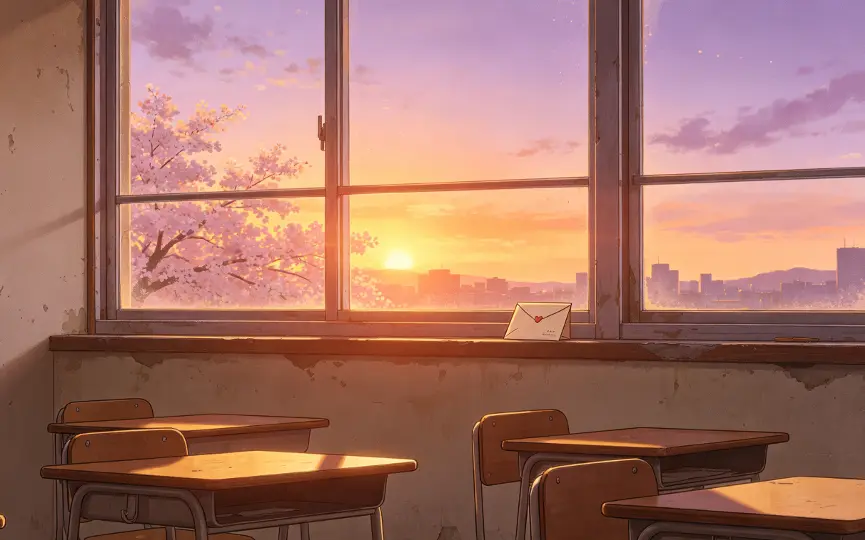
我们生活在一个通讯极度发达的时代,发送一条信息只需要几秒钟,但信息数量的增加并不会自动转化为情感深度的增加。贵树和明里发过千条短信,那些文字记录了他们多年的通讯史,却没有让他们的心靠近一厘米。真正的距离不是信号覆盖的问题,而是生命轨迹已经岔开的问题。
新海诚擅长描绘人与人之间因时间、空间和成长而产生的微妙隔阂,而这种隔阂往往不是被外力切断的,而是在不知不觉中自然形成的。贵树和明里没有吵架、没有背叛、没有发生任何决定性的分离事件,他们只是各自长大,被生活带向了不同的方向。短信可以跨越地理的间隔,却无法填补人生的错位。 当你们已经不再生活在同一个世界时,多少文字都无法让那个旧世界重新接通。
我们常常以为“保持联系”就能维持关系,但事实是:如果两个人的生活已经没有交集,信息的交换只会越来越像一种义务,而不是一种联结。那些还在短信里问“你最近好吗”的人,也许已经三年没有真正参与过彼此的生活了。
We live in an era of highly advanced communication, where sending a message takes only a few seconds, but an increase in the volume of messages does not automatically translate into greater emotional depth. Takaki and Akari exchanged thousands of text messages—words that chronicled their years of communication—yet their hearts never grew even a centimeter closer. The true distance between them isn’t a matter of cell service coverage, but rather the fact that their life paths have diverged.
Makoto Shinkai excels at depicting the subtle rifts that arise between people due to time, space, and personal growth—rifts that are often not severed by external forces, but form naturally and imperceptibly. Takaki and Akari didn’t have a fight, there was no betrayal, and no decisive event led to their separation; they simply grew up separately, each carried in a different direction by life. Text messages can bridge geographical distances, but they cannot mend the misalignment of life’s paths. Once you no longer live in the same world, no amount of words can reconnect you to that old world.
We often assume that “staying in touch” is enough to sustain a relationship, but the truth is: if two people’s lives no longer intersect, exchanging messages will increasingly feel like an obligation rather than a connection. Those who still ask “How have you been?” in text messages may not have truly been a part of each other’s lives for three years.
What do you think?