“우리가 싸우는 것은 세상을 바꾸기 위해서가 아니라, 세상이 우리를 바꾸지 못하게 하기 위해서다.”
中文译文:我们一路奋战,不是为了改变世界,而是为了不让世界改变我们。
English translation:We fight not to change the world, but to prevent the world from changing us.姜仁浩(강인호)
——韩国电影《熔炉》(한국 영화:도가니)电影上映时间(Film release dates)2011年9月22日
姜仁浩是一名刚入职雾津聋哑学校的教师,他无意中发现了该校校长、教师长期对残障学生实施性暴力和虐待的惊天黑幕。在带领受害学生与司法体系、地方权势艰难抗争的过程中,他们遭遇了无情的打压、威胁与背叛。最终,施暴者仅被判处轻刑,正义未能得到彻底伸张。面对巨大的无力感,姜仁浩在法庭外的寒风中,对同样伤痕累累的同伴徐幼真说出了这句话。这不是胜利者的宣言,而是一个看清了世界残酷真相后,依然选择坚守底线的人,给自己和同伴最后的信念支撑。
《熔炉》上映后,这句台词不仅成为韩国影史经典,更直接推动了韩国国会通过“性暴力犯罪处罚特别法”和“对残障者性暴力处罚法”的修订,史称“熔炉法”。这本身就是一个奇迹——一句看似“不奢求改变世界”的台词,最终却真正改变了世界。这或许是对这句话最意味深长的呼应:当你拼尽全力只为了不让自己倒下时,那挺立的姿态本身,就已经在悄然撬动这个世界了。
Kang In-ho, a newly hired teacher at a school for the deaf in the small city of Mujin, inadvertently uncovers a horrifying cover-up of systematic sexual abuse and violence inflicted on disabled students by the school’s principal and teachers. In the process of fighting alongside the victims against the judicial system and local powers, they face relentless suppression, threats, and betrayal. In the end, the perpetrators receive only light sentences, and justice is far from fully served. Amid this overwhelming sense of powerlessness, Kang In-ho says this line to his equally wounded colleague Seo Yoo-jin in the cold wind outside the courthouse. This is not a victor’s declaration, but rather a final anchor of faith that a man who has seen the cruel truth of the world offers to himself and his companion—a choice to hold the line.
After the release of The Crucible, this line not only became a classic in Korean film history but also directly prompted the National Assembly of South Korea to pass amendments to the “Special Act on the Punishment of Sexual Violence Crimes” and the “Act on the Punishment of Sexual Violence Against Persons with Disabilities”—collectively known as the “Crucible Act.” This in itself is a miracle—a line that seemed to “make no grand claims of changing the world” ultimately did just that. Perhaps this is the most profound interpretation of those words: when you give it your all just to keep from falling, the very act of standing tall is already quietly shifting the world.
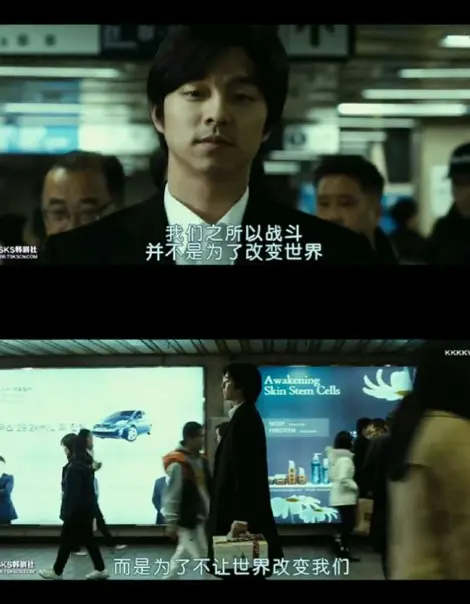
我们听过太多“改变世界”的豪言壮语,但강인호的这句话却将视角从宏大的外部目标,转向了脆弱而珍贵的内部坚守。它首先承认了一个残酷的前提——世界未必会被我们改变,甚至可能永远如此浑浊。但正因如此,我们才更要战斗,因为战斗的意义不在于结果,而在于过程中我们是谁。
“不让世界改变我们”,这九个字包含了三层沉重的警示。
第一层是对“同化”的抵抗。世界有一种强大的惯性,它用规则、潜规则、利益和恐惧日复一日地侵蚀着人的良知。강인호在抗争中亲眼目睹了多少人从愤怒变为沉默、从热血变为世故,那是一种比失败更可怕的“温水煮青蛙”。
第二层是对“犬儒主义”的拒绝。当正义落空时,最轻松的选择是嘲笑一切、否定一切、用“看透了”的姿态来保护自己。但강인호的这句话告诉我们:清醒并不意味着冷漠,看透了世界的糟糕,依然选择相信善良,这才是真正的勇气。
第三层是对“自我”的终极守护。人这一生最大的失败,不是你没能改变世界,而是你最终活成了自己曾经最厌恶的那种人。
从另一个角度看,这句话也蕴含着一种温柔的力量。它卸下了每个人肩上“必须成功”的沉重包袱——你不需要成为英雄,不需要拯救所有人,你只要在每一次选择面前,守住心底那一点微弱的光,就已经是在“奋战”了。电影的结局并不圆满,施暴者依旧逍遥,但강인호抱着受害学生的遗像在雨中呐喊的那一幕,恰恰印证了这句话的全部重量:即便世界纹丝不动,但只要我还站着,我就没有被它打败。
We’ve heard too many grand declarations about “changing the world,” but Kang In-ho’s words shift the focus from lofty external goals to a fragile yet precious inner resolve. They begin by acknowledging a harsh reality—that the world may not be changed by us, and may even remain this murky forever. But precisely because of this, we must fight all the more, for the meaning of the struggle lies not in the outcome, but in who we become through the process.
“Don’t let the world change us”—these nine words contain three layers of solemn warnings.
The first layer is resistance to “assimilation.” The world possesses a powerful inertia that, day after day, erodes people’s conscience through rules, unwritten rules, self-interest, and fear. Through his struggles, Kang In-ho has witnessed firsthand how many people have gone from anger to silence, from passion to world-weariness—a “frog in boiling water” scenario far more terrifying than failure.
The second layer is a rejection of “cynicism.” When justice fails to materialize, the easiest choice is to mock everything, deny everything, and protect oneself with an air of “having seen through it all.” But Kang In-ho’s words tell us this: clarity does not mean indifference. To see through the world’s ugliness yet still choose to believe in kindness—that is true courage.
The third layer is the ultimate defense of the “self.” The greatest failure in life is not that you failed to change the world, but that you ultimately became the very kind of person you once despised the most.
From another perspective, this statement also holds a gentle strength. It lifts the heavy burden of “must succeed” from everyone’s shoulders—you don’t need to be a hero, nor do you need to save everyone; you only need to hold onto that faint glimmer of light deep within your heart whenever you face a choice, and that alone is already “fighting.” The film’s ending is far from perfect; the perpetrator remains at large. Yet the scene where Kang In-ho cries out in the rain while clutching the victim’s portrait perfectly captures the full weight of this statement: even if the world remains utterly unchanged, as long as I am still standing, I have not been defeated by it.