“YOU NEVER FORGET YOUR FIRST LOVE.”
中文译文:你永远不会忘记你的初恋。布莱斯·罗斯基(Bryce Loski)
——美国电影《怦然心动》(English: Flipped)
电影上映时间(Film release dates)2010年8月6日
这句话出现在影片的结尾,作为布莱斯对整段成长经历的最终领悟。电影采用了男女主角双视角叙事,讲述了朱莉·贝克从二年级起就对布莱斯一见钟情,而布莱斯却一直对她避之不及。他们一起经历了梧桐树被砍、鸡蛋被扔、篮子男孩拍卖等一系列关于成长、自尊与误解的事件,终于在八年级即将结束时,布莱斯真正“看见”了朱莉——那个从七岁起就未曾离开过他视野的女孩。这句话是他在为朱莉种下一棵梧桐树时,心中默念的独白,也是整部电影关于青春、初恋与成长的核心注脚。
This line appears at the end of the film, as Bryce Loski’s final realization about his entire journey of growing up. The film employs a dual-perspective narrative, telling the story of how Juli Baker fell in love with Bryce at first sight in second grade, while Bryce spent years trying to avoid her. Through a series of events—the cutting of the sycamore tree, the discarded eggs, the basket-boy auction—both characters navigate issues of self-respect, misunderstanding, and emotional growth. By the end of eighth grade, Bryce finally truly “sees” Juli—the girl who had been there in his life since he was seven. This line is his inner monologue as he plants a sycamore tree in Juli’s yard, and it serves as the emotional anchor of the entire film.
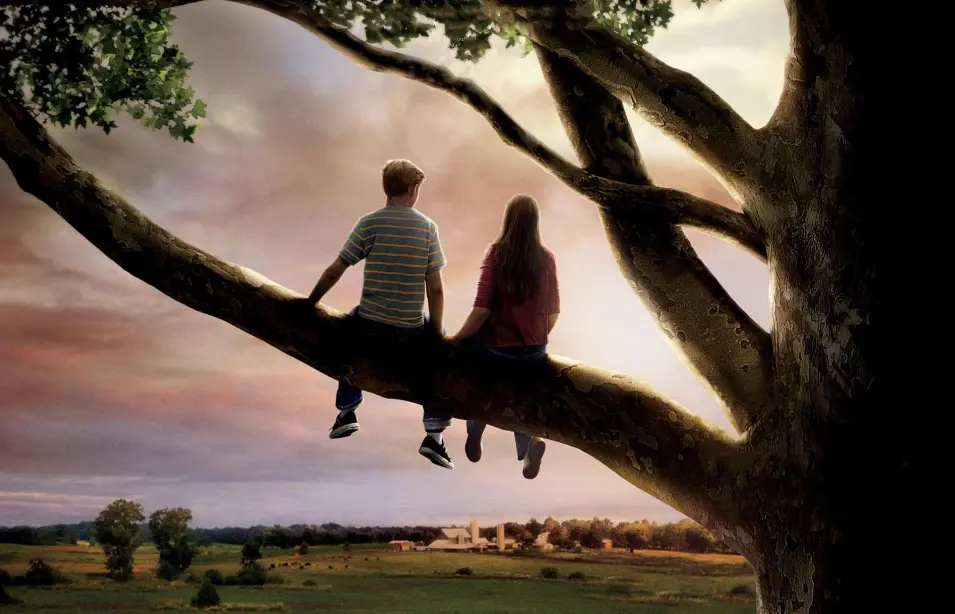
这句话的力量,首先在于它极其朴素,却极其精确地捕捉了初恋的本质——它不是“永远在一起”,而是“永远记得”。罗伯·莱纳用这部温暖明亮的电影告诉我们,初恋之所以无法被忘记,不是因为它最完美,也不是因为它一定修成正果,而是因为它是我们人生中第一次对另一个人产生强烈而纯粹的情感。那种心跳、那种期待、那种笨拙的表达,构成了我们情感记忆的底色。朱莉对布莱斯而言,从“避之不及”到“无法忘记”,这个过程本身就是一个少年对自我认知的完成。
更深一层,这句话揭示了一个事实:“忘不掉”的未必是那个人,而是那个人所对应的那个阶段的自己。朱莉对布莱斯的意义,从来不只是初恋对象那么简单——她是那个教会他“整体大于部分之和”的人,是那个让他明白“尊严比喜欢更重要”的人,是那个在他面前种下一棵梧桐树、让他看见更高风景的人。布莱斯忘不掉朱莉,本质上是他无法忘掉那个因为朱莉而变得更好的自己。初恋之所以不朽,是因为它塑造了我们对“爱”的第一次定义。
从叙事角度来看,这句话出现在种树的场景中,构成了对电影开头那个“朱莉在树上不肯下来”画面的完美呼应。当年是朱莉爬上树为布莱斯呼唤校车,如今是布莱斯跪在土里为朱莉种下一棵树。这种角色的反转,完成了两人关系的终极和解。而“never forget”这个表述,既是一个已经发生的结论(他确实忘不掉),也是一个对未来的承诺(他愿意带着这份记忆继续前行)。“不忘记”在这里不是一种被动的沉积,而是一种主动的铭记。
在青春期电影的传统中,初恋常常被处理为“短暂而热烈”的瞬间,但《怦然心动》却用整整八年时间铺设了一段缓慢而深沉的情感弧光。这句话之所以动人,是因为它没有用“永远在一起”来欺骗观众,而是用“永远记得”来尊重真实——人生中大部分重要的人都只能陪你走一段路,但那些教会你爱的人,无论走多远,都活在你的身体里。就像朱莉·贝克说的:“我爬得越高,眼前的风景便愈发迷人。”而那个让她爬上树的人,最终成了她再也无法忘记的风景。
The power of this line lies, first and foremost, in its extreme simplicity, yet it captures the essence of first love with remarkable precision—it is not about “being together forever,” but about “remembering forever.” Through this warm and uplifting film, Rob Reiner shows us that the reason first love is unforgettable is not because it was perfect, nor because it necessarily led to a happy ending, but because it was the first time in our lives that we felt such intense and pure emotions for another person. That pounding heart, that anticipation, and those clumsy expressions form the backdrop of our emotional memories. For Bryce, Julie’s journey from someone he “couldn’t get away from” to someone he “can’t forget” is, in itself, the completion of a teenager’s self-discovery.
On a deeper level, this line reveals a truth: what we “can’t forget” isn’t necessarily that person, but rather the version of ourselves from that stage of life that person represents. Julie’s significance to Bryce has never been limited to that of a mere first love—she was the one who taught him that “the whole is greater than the sum of its parts,” the one who made him realize that “dignity is more important than being liked,” and the one who planted a sycamore tree before him, allowing him to see a broader horizon. Essentially, Bryce cannot forget Julie because he cannot forget the better version of himself that Julie helped him become. First love is immortal because it shapes our very first definition of “love.”
From a narrative perspective, this line appears during the tree-planting scene, perfectly echoing the opening shot of “Julie refusing to come down from the tree.” Back then, it was Julie who climbed the tree to flag down the school bus for Bryce; now, it is Bryce who kneels in the dirt to plant a tree for Julie. This reversal of roles completes the ultimate reconciliation of their relationship. The phrase “never forget” serves both as a conclusion based on what has already happened (he truly cannot forget) and as a promise for the future (he is willing to move forward while carrying this memory with him). “Never forgetting” here is not a passive accumulation but an active act of remembrance.
In the tradition of coming-of-age films, first love is often portrayed as a “fleeting yet passionate” moment, but The Notebook spends a full eight years weaving a slow and profound emotional arc. This line is so moving because it doesn’t deceive the audience with “we’ll be together forever,” but instead honors reality with “I’ll always remember”—most of the important people in life can only walk with you for a part of the journey, but those who teach you to love will live on within you, no matter how far you go. As Julie Baker says, “The higher I climb, the more enchanting the view becomes.” And the person who inspired her to climb that tree ultimately became a view she could never forget.
What do you think?