「人はいつも矛盾の中で生きている。人間への絶望と信頼。その狭間で人は生きている。」
中文译文:人总是活在矛盾当中,对人类的绝望以及信赖,我们在这夹缝间求生存。
English translation: People always live amid contradictions—despair and trust in humanity. They live caught between these two extremes.
松崎海(松崎 海)
——日本动画《虞美人盛开的山坡》(日文片名:コクリコ坂から)
动画上映时间(Anime release dates)2011年7月16日(日本)
这句话出现在影片的中段或结尾部分,作为对整部作品主题的总结。故事设定在1963年横滨,日本战后复兴与经济高速发展的时代背景下,女主角松崎海与男主角风间俊围绕着一栋面临拆除的古老建筑“拉丁区”展开青春故事。他们既要面对父辈在战争中留下的创伤与隔阂(绝望),又要满怀对未来的憧憬并为之努力(信赖),必须在守护传统与拥抱变革的矛盾中做出自己的选择。这句话精准地捕捉了那个时代年轻人的心理状态,也道出了人类永恒的生存困境。
This line appears in the middle or toward the end of the film, serving as a summary of the work’s overarching theme. Set in Yokohama in 1963, against the backdrop of Japan’s postwar recovery and rapid economic growth, the film tells the coming-of-age story of the female lead, Umi Matsuzaki, and the male lead, Shun Kazama, centered around an old building called “Latin Quarter” that is slated for demolition. They must confront both the trauma and rifts left by their parents’ wartime experiences (despair) and their own hopes for the future, for which they strive (trust), while navigating the conflict between preserving tradition and embracing change to make their own choices. This line precisely captures the psychological state of young people during that era and articulates the eternal existential dilemmas of humanity.
我们往往习惯于非黑即白的判断——要么信任,要么怀疑;要么悲观,要么乐观。但这句话却说:人总是活在矛盾当中。 绝望与信赖不是二选一的选项,而是同时存在的现实。你可以在对人性感到失望的同时,依然选择相信具体的某个人;可以在对时代感到悲观的同时,依然为未来的可能性而努力。承认这种矛盾,不是软弱,而是清醒。
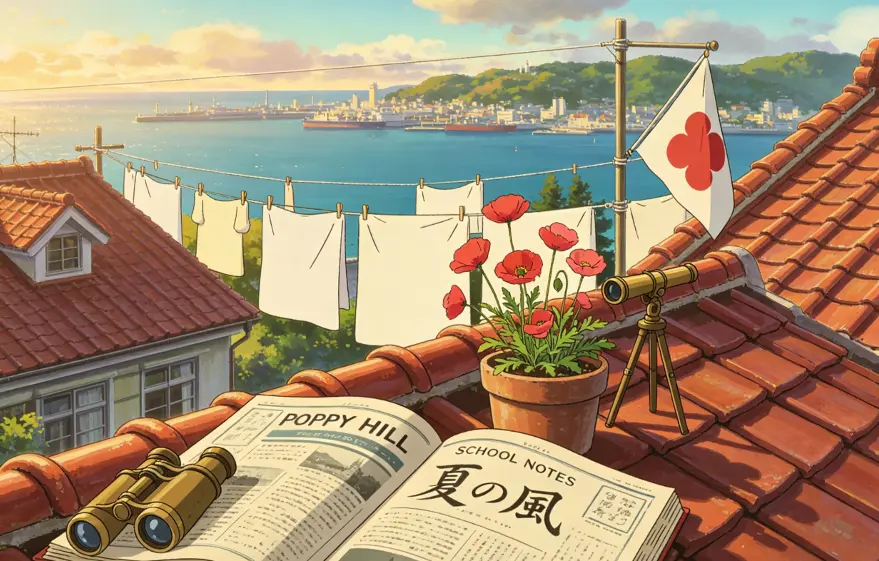
《虞美人盛开的山坡》所处的特殊时代——战后日本。那一代人刚刚经历了战争的毁灭性打击,对“人类”这个整体概念必然充满怀疑;但与此同时,废墟上的重建、经济的起飞、年轻人为了保卫旧建筑而奔走的身影,又让他们不得不保有一份信赖。这种矛盾不是抽象的哲学思辨,而是被历史碾压过的一代人的生存实感。 正如宫崎骏在东日本大地震后所说:“即使有困难和痛苦,仍是值得我们努力再次让它变成一个美丽的岛屿。”
我们每天目睹网络暴力、环境危机、社会不公时,常感到对“人类”的失望;但同时,生活中具体的善意、身边人的支持、微小的进步,又让我们保有一份信赖。这种矛盾不再是宏大的时代命题,而是渗透在日常的每一个选择里。生存的智慧不在于消除矛盾,而在于学会带着这份复杂的认知,更坚韧、更清醒地走下去。
We are often accustomed to making black-and-white judgments—either trust or distrust; either pessimism or optimism. But this saying tells us: People always live amid contradictions. Despair and trust are not mutually exclusive options, but realities that coexist. You can choose to trust a specific person even while feeling disappointed in human nature; you can strive for the possibilities of the future even while feeling pessimistic about the times. Acknowledging this contradiction is not a sign of weakness, but of clarity.
The Hill Where Poppies Bloom is set in a unique era—postwar Japan. That generation had just endured the devastating blows of war and was inevitably filled with skepticism toward the concept of “humanity” as a whole; yet at the same time, the reconstruction from the ruins, the economic takeoff, and the sight of young people campaigning to preserve old buildings compelled them to hold onto a measure of trust. This contradiction is not abstract philosophical speculation, but the tangible sense of existence felt by a generation crushed by history. As Hayao Miyazaki said after the Great East Japan Earthquake: “Even with difficulties and suffering, it is still worth our effort to make it a beautiful island once again.”
When we witness cyberbullying, environmental crises, and social injustice every day, we often feel disappointed in “humanity”; but at the same time, the concrete acts of kindness in our lives, the support of those around us, and even the smallest steps forward allow us to hold onto a sense of trust. This contradiction is no longer a grand, overarching theme of our era, but rather something that permeates every choice we make in our daily lives. The wisdom of survival does not lie in eliminating contradictions, but in learning to move forward with greater resilience and clarity while embracing this complex reality.
What do you think?