「思い出というのは不思議なものだ。過去に生きていて、現在に存在し、未来に影響を与える。」
中文译文:回忆是一种很奇妙的东西,它生活在过去,存在于现在,却能影响未来。
English translation: Memories are a mysterious thing. They live in the past, exist in the present, and influence the future.冈岛妙子(岡島タエ子)
——日本动画电影《岁月的童话》(日文片名:おもひでぽろぽろ)
电影上映时间(Film release dates)1991年7月20日(日本)
这句话出现在影片的结尾部分,是成年妙子在结束乡村假期、返回东京的火车上,伴随着童年记忆的不断闪现,对“回忆”这一现象发出的总结。《岁月的童话》讲述了27岁的妙子向公司请假,前往乡下体验农家生活,在旅途中不断回忆起小学五年级时的自己——第一次吃菠萝、第一次被男孩告白、第一次生理期、第一次被父亲打——那些看似琐碎的童年片段,在她的成年生活中突然变得异常清晰,并开始影响她对当前生活的判断。她带着过去的自己一起旅行,最终在那些“住在过去”的回忆引导下,做出了关于未来的重要决定。这句话正是她对整段体验的归纳:回忆不是死在过去的东西,它在你的现在里活着,并且会伸出手去改变你即将抵达的地方。
This line appears toward the end of the film, when the adult Taeko—on a train back to Tokyo after her rural vacation, with childhood memories constantly flashing through her mind—offers her reflections on the phenomenon of “memory.” A Fairy Tale of Time tells the story of 27-year-old Taeko, who takes a leave of absence from her job to experience farm life in the countryside. During her journey, she repeatedly recalls her fifth-grade self—her first time eating pineapple, the first time a boy confessed his feelings to her, her first period, and the first time her father hit her. These seemingly trivial childhood fragments suddenly become strikingly vivid in her adult life and begin to influence her judgments about her present circumstances. She travels with her past self, and ultimately, guided by those memories that “live in the past,” she makes an important decision about her future. This sentence encapsulates her reflection on the entire experience: Memories are not things that die in the past; they live in your present and reach out to change where you are about to arrive.
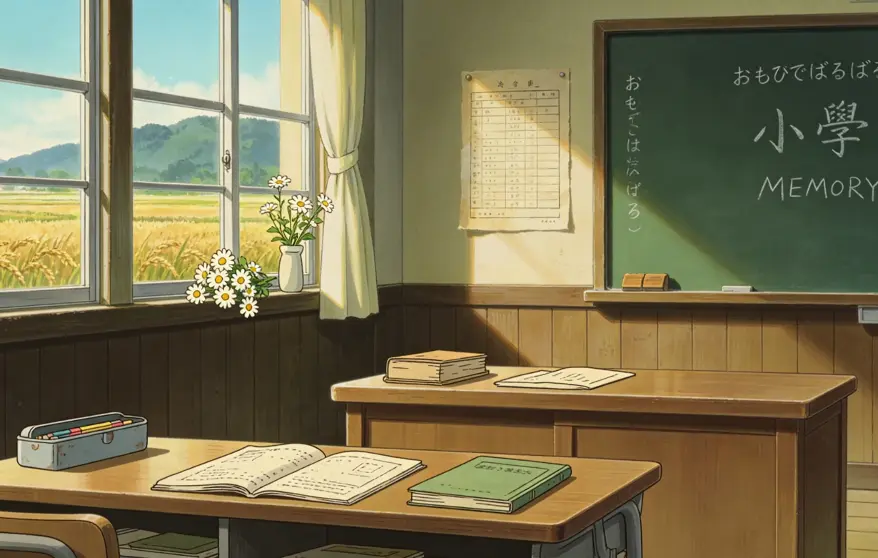
我们常把回忆理解为“已经发生的事情”,存放在记忆的仓库里,偶尔翻出来看看。但妙子却说:它生活在过去,存在于现在,却能影响未来。 三个时态在同一个句子里完成了一次穿越——过去提供内容,现在提供载体,未来是它要去推的那扇门。这让“回忆”不再只是回望的动作,而是一股持续流动的暗流,在你不知道的时候,悄悄改变着你脚下的方向。
整部电影就是由“现在”和“过去”两条线交织而成的——现在的妙子在乡下采红花、做堆肥、和俊雄一家相处;过去的妙子在课堂上算分数、在操场上被男生告白、在浴室里第一次面对身体的变化。表面上它们是两条平行线,但随着剧情推进,你会发现过去的每一个小片段都在解释现在的妙子为什么会有某种反应——她为什么会因为“不会做分数的除法”而害怕数学,为什么会因为“没有被男生选去演话剧”而对拒绝格外敏感。她带着11岁的自己生活了27年,那个女孩从来就没有离开过她,只是她一直没意识到。 而当她终于承认那个过去仍然在她的现在里活动时,她反而获得了改变未来的能力。
《岁月的童话》没有任何戏剧性的情节——没有死亡、没有恋爱、没有冒险——它只是一个人安静地回忆童年,然后安静地做出了一个“我决定留在乡下”的决定。但正是这种平静的叙事,让“回忆”本身成为主角。高畑勋想说的是:人之所以能够做出未来的选择,往往不是被宏大的理想驱动的,而是被那些微小到几乎不值得一提的童年瞬间影响的。 11岁那年没能参加话剧演出的失落感,可能会在27岁那年让你避免进入一段不健康的关系——因为你的身体替那个11岁的女孩记得了。
我们习惯性地告诉自己“都过去了”“不要再想了”“人要向前看”,仿佛过去可以被切割掉,只留下现在和未来。但妙子却说:过去一直都在,它就在你现在里,你越假装它不在,它越会在你不注意的时候用力推你一把。 与其否认它,不如承认它、看见它、和它相处——因为那些已经发生的事,只有当你承认它们仍然在现在里活着时,你才会停止被它们推着走,转而开始带着它们走向你想要的方向。
We often think of memories as “things that have already happened,” stored away in the warehouse of our minds, to be occasionally brought out and revisited. But Miaozhi says: Memories live in the past, exist in the present, yet can influence the future. Three tenses travel through time within a single sentence—the past provides the content, the present serves as the vessel, and the future is the door it seeks to push open. This transforms “memory” from a mere act of looking back into a constantly flowing undercurrent that, unbeknownst to you, quietly alters the direction you’re heading.
The entire film is woven from two intertwining threads: the “present” and the “past”—the present-day Taeko picking safflower in the countryside, making compost, and spending time with Toshio’s family; the past-day Taeko calculating fractions in class, being confessed to by a boy on the playground, and facing the changes in her body for the first time in the bathroom. On the surface, these are two parallel storylines, but as the plot unfolds, you’ll discover that every small fragment of the past explains why the present-day Taeko reacts the way she does—why she fears math because she “couldn’t do division in fractions,” and why she’s particularly sensitive to rejection because she “wasn’t chosen by a boy to be in the play.” She has lived with her 11-year-old self for 27 years; that girl never left her, though she simply hadn’t realized it. And when she finally acknowledges that her past is still active in her present, she gains the power to change her future.
A Fairy Tale of Time has no dramatic plot—no death, no romance, no adventure—it simply follows a person quietly reminiscing about her childhood, then quietly making the decision to “stay in the countryside.” But it is precisely this calm narrative that allows “memory” itself to become the protagonist. What Isao Takahata wanted to convey is this: the choices people make about their future are often driven not by grand ideals, but by childhood moments so small they’re almost not worth mentioning. The sense of loss you felt at age 11 when you couldn’t participate in that school play might, at age 27, prevent you from entering an unhealthy relationship—because your body remembers it for that 11-year-old girl.
We habitually tell ourselves, “It’s all in the past,” “Don’t dwell on it,” and “You have to look ahead,” as if the past could be severed, leaving only the present and the future. But Miaozhi says: The past is always there; it’s right in your present. The more you pretend it isn’t there, the harder it will push you when you’re not paying attention. Rather than denying it, acknowledge it, see it, and learn to live with it—because only when you acknowledge that those past events are still alive in the present will you stop being pushed around by them and instead begin to carry them with you toward the direction you want to go.
What do you think?