“每个人只能陪你走一段路,迟早是要分开的。”
English translation:Everyone can only walk with you for a while; sooner or later, you’ll have to part ways.沈涛(Shen Tao)
——中国电影《山河故人》(Chinese Film: Mountains May Depart)
电影上映时间(Film Release dates)2015年10月30日
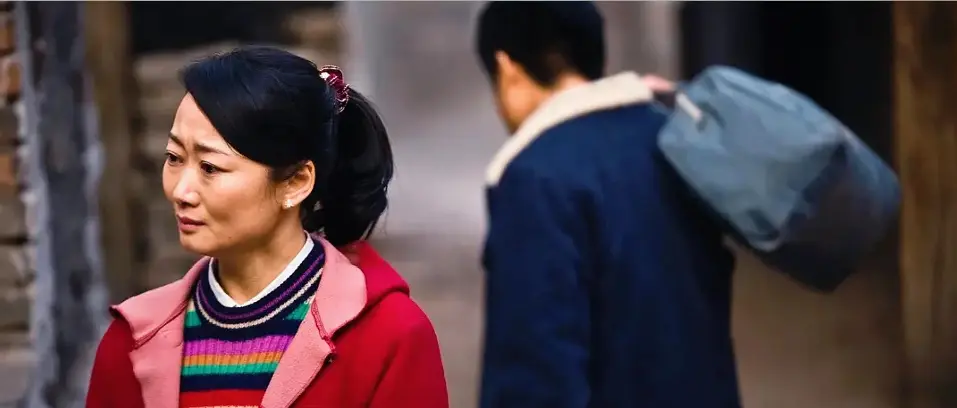
这句话出现在电影的多个时空段落中。沈涛在冬日的雪地里独自跳舞,她依然是那个在小县城里守着旧日记忆的女人。而她的儿子张到乐早已远在澳大利亚,与母亲之间隔着语言、文化与时间的巨大鸿沟。既是沈涛对自己命运的总结,也是对“离别”的诠释——它贯穿了三段式故事中1999年的友情、2014年的亲情和2025年的乡愁,成为整部电影的情感核心。
This line appears in multiple temporal segments of the film. As Shen Tao dances alone in the snowy winter landscape, she remains the woman who clings to memories of the past in her small county town. Meanwhile, her son, Zhang Daole, has long since moved to Australia, separated from his mother by a vast chasm of language, culture, and time. This line serves both as Shen Tao’s reflection on her own fate and as an interpretation of “parting”—a theme that runs through the three-part narrative, encompassing the friendship of 1999, the familial bonds of 2014, and the nostalgia of 2025, forming the emotional core of the entire film.
以极简的语言击穿了人类关系中最脆弱的本质。它对“永恒关系”这一执念的彻底解构。我们习惯在每一段关系开始时潜意识地期盼“永远”,但《山河故人》却用三个时代、两代人的命运告诉我们:关系的消散与断裂才是常态,而恒久反而是个意外。沈涛与张晋生的婚姻解体、沈涛与梁建军的友情疏离、沈涛与儿子张到乐之间的情感隔离——所有的“开始”都走向了“分开”,无一例外。
贾樟柯将个人情感置于中国社会剧烈转型的背景下:1999年,人们在世纪初的狂欢中拥抱变化;2014年,资本与移民拆散了家庭;2025年,全球化制造了文化上的“无根之人”。“迟早是要分开的”,既是人的选择,也是时代的宿命。沈涛守着汾阳的故土,到乐却在澳洲说着英文试图寻找自己的身份——这种母子之间的“分开”,不仅仅是地理上的,更是精神上的断崖。
虽然“每个人只能陪你走一段路”,但那些走过的路并没有消失,它们化成了你的记忆、你的身体、你的情感底色。沈涛在雪中起舞的那一幕之所以动人,不是因为她还在等待谁回来,而是因为她已经把那段路内化为自己生命的一部分。她接受了“迟早要分开”的真相,却依然保留着当初的温度。这种“清醒地怀念”,或许是对抗离别最体面的方式。
在当代社会,人与人之间的关系越来越短暂、越来越碎片化,“只能陪你走一段路”几乎成了所有亲密关系的默认设定。但是关系的长度并不等于关系的深度。有些人陪你走了十年,却抵不上陪你走过某个关键转折点的三天。真正重要的,从来不是“走了多远”,而是“走过的那段路,是否改变了你”。
With minimalist language, it pierces to the very core of the fragility inherent in human relationships. It thoroughly deconstructs the obsession with “eternal relationships.” We are accustomed to subconsciously hoping for “forever” at the beginning of every relationship, but Mountains May Depart uses the fates of two generations across three eras to show us that the fading and breaking of relationships is the norm, while permanence is, in fact, the exception. The breakdown of Shen Tao and Zhang Jinsheng’s marriage, the estrangement of Shen Tao and Liang Jianjun’s friendship, and the emotional distance between Shen Tao and her son Zhang Daole—every “beginning” inevitably leads to “separation,” without exception.
Jia Zhangke places personal emotions against the backdrop of China’s dramatic social transformation: in 1999, people embraced change amid the revelry of the new century; in 2014, capital and migration tore families apart; in 2025, globalization created culturally “rootless” individuals. “Sooner or later, we’ll part ways”—this is both a personal choice and the fate of the times. While Shen Tao clings to her homeland in Fenyang, Daole speaks English in Australia, trying to find his own identity—this “separation” between mother and son is not merely geographical, but a spiritual chasm.
Although “everyone can only walk a part of the way with you,” the paths you’ve traveled do not vanish; they become your memories, your body, and the emotional foundation of who you are. The reason the scene of Shen Tao dancing in the snow is so moving is not because she is still waiting for someone to return, but because she has already internalized that journey as part of her own life. She has accepted the truth that “sooner or later, we must part,” yet she still retains the warmth of those early days. This “lucid nostalgia” is perhaps the most dignified way to confront parting.
In contemporary society, relationships between people are becoming increasingly fleeting and fragmented; “I can only walk with you for a while” has almost become the default setting for all intimate relationships. But the length of a relationship does not equal its depth. Some people may have walked with you for ten years, yet that pales in comparison to the three days spent with you during a pivotal turning point. What truly matters has never been “how far you’ve walked,” but rather “whether the path you’ve walked has changed you.”
What do you think?