“有人说:真正的爱情,背后没有秘密。说这话的人,既不明白爱情,也不明白秘密。”
English translation: Some people say, ‘True love has no secrets.’ Those who say this understand neither love nor secrets.
叶湘伦(Ye Xianglun)
——中国电影《不能说的秘密》(Taiwanese Film: Secret)
电影上映时间(Film release dates)2007年7月27日
这句话出现在影片的开头与结尾,作为整部电影的情感总纲与最终回响。电影讲述了一段跨越时空的爱情——叶湘伦是音乐系的一名学生,他在旧琴房弹奏时,意外通过一首神秘的钢琴曲《Secret》穿越到了20年前,遇见了路小雨。两人在时空中相恋,但小雨每次穿越都会看到不同的叶湘伦,而湘伦直到影片后半段才逐渐揭开这个秘密:小雨其实是一个生活在20年前的人,她为了见到他,每次都要冒着缩短生命的风险穿越时空。这段爱情从头到尾都包裹在秘密之中——小雨不能告诉湘伦自己来自过去,湘伦也不能告诉别人他爱上了一个“不存在”的人。而影片结尾,当湘伦终于理解了所有的秘密,并选择在琴房被拆毁的最后一刻再次弹奏那首曲子、穿越回去寻找小雨时,这句旁白缓缓响起。它既是对整段“秘密之恋”的总结,也是对所有试图用“毫无秘密”来定义爱情的人的温柔反驳——真正的爱情不是没有秘密,而是所有的秘密都指向同一个方向:我爱你。
This line appears at the beginning and end of the film, serving as its emotional thread and final resonance. The film tells the story of a love that transcends time and space—Ye Xianglun, a music major, is playing in an old practice room when he unexpectedly travels back 20 years through a mysterious piano piece titled “Secret” and meets Lu Xiaoyu. The two fall in love across time and space, but every time Xiaoyu travels back, she sees a different version of Ye Xianglun. It isn’t until the latter half of the film that Xianglun gradually uncovers the secret: Xiaoyu is actually a person living 20 years in the past, and to see him, she risks shortening her own life with every journey through time.
This love story is shrouded in secrecy from beginning to end—Xiaoyu cannot tell Xianglun that she comes from the past, and Xianglun cannot tell anyone that he has fallen in love with someone who “does not exist.” At the film’s conclusion, when Xianglun finally understands all the secrets and chooses to play that piece one last time just as the piano room is about to be demolished—traveling back in time to find Xiaoyu—this voiceover slowly echoes: It serves both as a summary of the entire “secret romance” and as a gentle rebuttal to all those who try to define love as “without secrets”—true love isn’t the absence of secrets, but rather that all secrets point in the same direction: I love you.
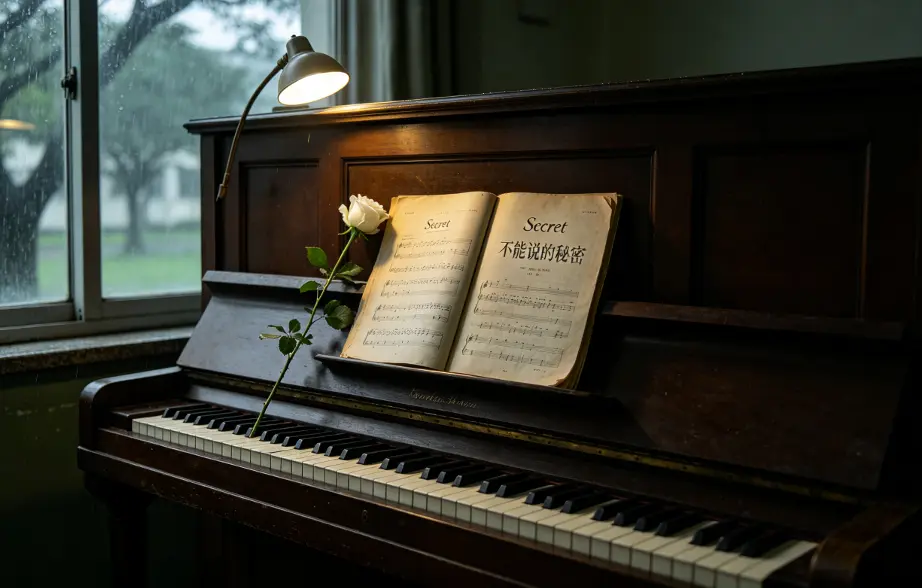
我们通常被灌输一种浪漫主义的观点:真正的爱应该是透明的、没有隐瞒的、彼此完全坦诚的。但《不能说的秘密》却用一段跨越时空的爱情证明:有些秘密不是因为欺骗而存在,而是因为爱得太深而不得不存在。 小雨不能告诉湘伦她来自20年前,不是因为她不信任他,而是因为她害怕一旦说出这个秘密,湘伦会把她当作疯子,而她就此永远失去他。这个秘密是她的铠甲,也是她的软肋——它让她无法完全坦诚,但也让她能够以另一种方式守护这份爱。说“真正的爱情背后没有秘密”的人,既低估了爱情可能承载的重量,也高估了人类能够承受的透明度。
在电影中,叶湘伦在得知真相后,没有因为小雨隐瞒了时空穿越的秘密而愤怒,反而在琴房倒塌的最后一刻选择弹琴回到过去。这个选择意味着:秘密从不是他们之间的障碍,而是他们爱情的证明。因为小雨愿意冒着生命危险穿越时空来见他,因为湘伦愿意在琴房坍塌的瞬间放弃自己的现实世界去追随她——这些秘密反而让他们的爱比任何“没有秘密”的爱情都更加深刻。秘密不是爱的反面,而是爱的容器——它装下了那些太重的真相、太深的付出、以及不敢轻易说出口的告白。
缩短自己的生命,只为了赴一场与未来之人的约会。“不能说的秘密”这个名字本身已经暗示了:有些秘密之所以不能说,不是因为它们见不得光,而是因为说了之后,爱就可能不存在了。 小雨选择不说,是因为她选择了爱——她宁愿让湘伦误解她忽冷忽热,也不愿让他承受“你爱的这个人可能随时会消失”的恐惧。
越来越多的人认为“完全透明”才是健康的爱情——翻手机、报备行踪、公开所有社交账号——仿佛没有秘密才是爱的证明。但《不能说的秘密》以一种唯美而残忍的方式提醒我们:每个人都有自己的“不可说”——那不是对伴侣的背叛,而是对自己内心的一种保护。 有些感受需要时间才能被理解,有些经历需要在恰当的时机才能被分享,有些秘密之所以被保留,恰恰是因为它们太珍贵、太脆弱、太容易被误解。真正的爱不是剥夺对方的秘密,而是允许对方保留秘密的同时,依然选择相信。
最后,这句台词与影片最后一个镜头——湘伦在20年前的教室里推开门,小雨对他露出微笑——形成了完美的情感闭环。那个秘密最终被揭开,但揭开的瞬间也意味着过去与未来的交汇、现实与幻想的融合。真正的爱情,背后或许有秘密,但那些秘密的终点永远是重逢。 就像叶湘伦和路小雨——他们之间隔了一整个时空,却依然可以在同一架钢琴前相遇。说“真正的爱情背后没有秘密”的人,大概是没有遇到过需要用一整个时空来守护的爱。而那些真正爱过的人都会明白:秘密不是爱情的敌人,它是爱情的另一种语言——一种只有深陷其中的人才能听懂的语言。
We’re often taught a romanticized view: true love should be transparent, free of secrets, and marked by complete honesty between partners. But Secret proves, through a love story that transcends time and space, that some secrets exist not because of deception, but because love runs so deep that they simply must exist. Xiaoyu couldn’t tell Xianglun that she came from 20 years in the past—not because she didn’t trust him, but because she feared that once she revealed this secret, Xianglun would think she was crazy, and she would lose him forever. This secret was both her armor and her Achilles’ heel—it prevented her from being completely open, yet it also allowed her to protect their love in a different way. Those who say “there are no secrets behind true love” both underestimate the weight love can bear and overestimate the level of transparency humans can endure.
In the film, after learning the truth, Ye Xianglun does not grow angry at Xiao Yu for concealing the secret of time travel; instead, at the very last moment before the music room collapses, he chooses to play the piano and return to the past. This choice signifies that secrets were never an obstacle between them, but rather a testament to their love. Because Xiaoyu was willing to risk her life to travel through time to see him, and because Xianglun was willing to give up his reality in the instant the music room collapsed to follow her—these secrets actually make their love deeper than any love “without secrets.” Secrets are not the opposite of love, but rather its vessel—they hold truths too heavy to bear, sacrifices too profound, and confessions too delicate to utter.
Shortening one’s own life just to keep a date with someone from the future. The title Secret itself already hints at this: some secrets cannot be revealed not because they are shameful, but because once spoken, love might cease to exist. Xiao Yu chose to remain silent because she chose love—she would rather have Xiang Lun misunderstand her as being hot and cold than have him endure the fear that “the person you love might vanish at any moment.”
More and more people believe that “complete transparency” is the hallmark of a healthy relationship—checking each other’s phones, reporting one’s whereabouts, and making all social media accounts public—as if the absence of secrets were proof of love. But Secret reminds us, in a beautiful yet cruel way, that everyone has their own “unspoken truths”—these are not betrayals of a partner, but rather a form of self-protection. Some feelings take time to understand; some experiences can only be shared at the right moment; and some secrets are kept precisely because they are too precious, too fragile, and too easily misunderstood. True love isn’t about stripping the other person of their secrets, but about allowing them to keep them while still choosing to trust them.
Finally, this line forms a perfect emotional loop with the film’s final shot—Xianglun pushing open the door to the classroom from 20 years ago, as Xiaoyu smiles at him. That secret is ultimately revealed, but the moment of revelation also signifies the convergence of past and future, the fusion of reality and fantasy. True love may have secrets behind it, but the destination of those secrets is always a reunion. Just like Ye Xianglun and Lu Xiaoyu—though separated by an entire span of time and space, they can still meet at the same piano. Those who say “there are no secrets behind true love” have likely never encountered a love worth safeguarding across an entire span of time and space. And those who have truly loved will understand: secrets are not the enemy of love; they are another language of love—a language that only those deeply immersed in it can understand.
What do you think?